
Toilet training: “Help! My kid is scared of pooing”

Yes, it’s totally normal for toilet-training toddlers to feel scared of pooing.
By the time your toddler is ready for toilet training you’ll have encountered ‘one or two’ bumps in your parenting journey, where things didn’t go quite how you thought they might.
Potty training can throw curveballs, like when your child is scared to poo on the potty or toilet.
Megan Baker, a midwife and mum of two, shares tips to help you understand why your tot avoids the toilet and how to make the transition easier.
Toilet training and being scared of pooing
How do I know my child is ready to toilet train?
Your toddler is ready to toilet train if they can follow simple instructions, dislike wet or dirty nappies, show interest in your bathroom habits, and can remove their nappy.
Why does my child refuse to poo on the potty?
Kids often avoid sitting on the potty, especially to poo. One common reason is they’re too busy with a million other things! Wees come out fast, but poos take patience – something toddlers aren’t known for.
Another issue is fear. “It’s not uncommon for toddlers to be scared of pooing,” says Megan. “It might also be that they simply aren’t ready to make the transition out of nappies.”
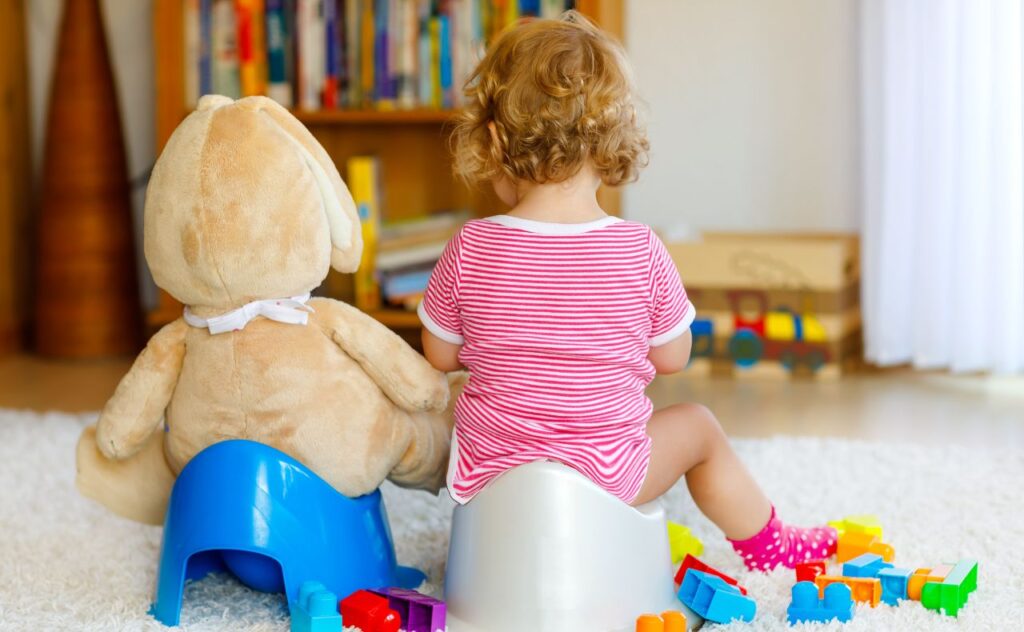
Why is my child scared of pooing?
“If your child appears to be scared of pooing on the potty, you’re not alone,” says Megan. “It’s common for toddlers to be fearful, for a host of reasons including new sensations.” These include the feeling of air around their usually covered bottom or the sensation of a poo leaving their body entirely, which is a very different experience to how it’s felt for them since they were born.
“They might be scared that they’ll fall into the potty or toilet – or that they’ll fall off the toilet,” Megan continues. A sturdy, high-backed, supportive potty reassures them that they are safe. With their feet firmly planted on the floor, they can push their poo out when ready.
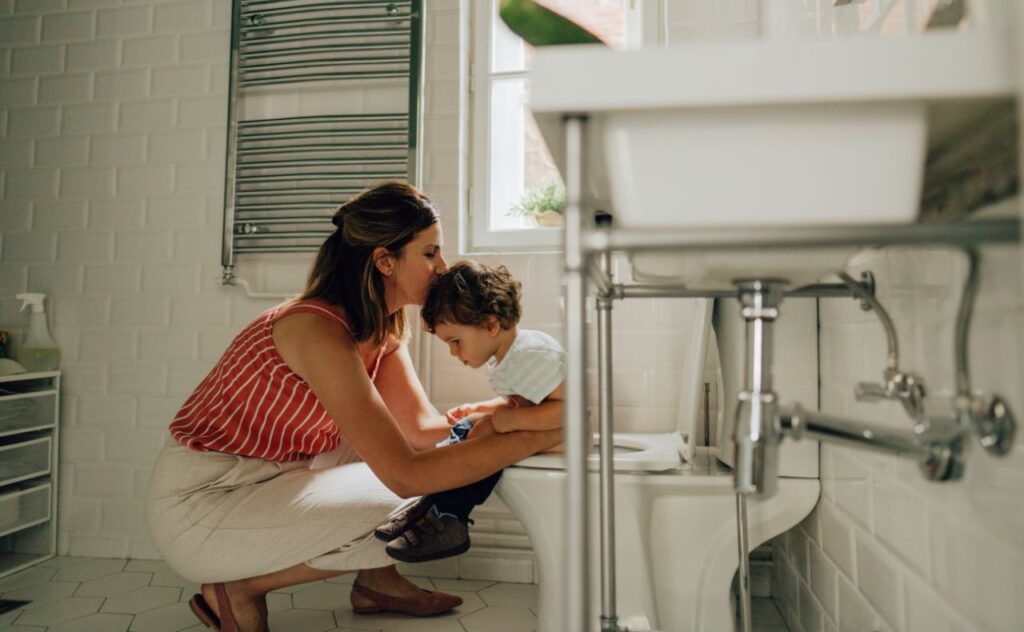
“Bathroom doors are often closed when people use the toilet, so it’s important to leave the door open to allow your child to see you and other family members use the toilet,” says Megan. It’s a way of demystifying the process – and, yes, it’s also the beginning of many years of never going to the toilet on your own!
10 toilet training tips to help with number twos!
1.Keep the door open.
Let your toddler see you and family members use the toilet. Keep the door open, talk openly, and let them see and hear the flush so they aren’t scared of the noise or getting sucked down.
2. Stage a sit in
Don’t rush to get your child toilet trained if they are showing fear. Still encourage them to sit on the potty on a regular basis but let them stay clothed, wearing a nappy. Move to pull-ups, which are easier for them (and you) to get the on and off. You might try cutting a hole in the bottom of the pull-ups or nappy, or placing a potty liner such as babyU Popette Plus Liners or their nappy – don’t flush these! – in the toilet to catch the poo.
3. Bribery can be a good thing…
Gentle persuasion helps in parenting. Create a box with storybooks, toys, bubbles, reward stickers (stick them on the potty), or special treats that come out only at toilet time.
4. Stories about poos!
Don’t only talk about toilet training at poo time. Get some books and stories about poos to read throughout the day.
5. High and dry
Make sure your little one feels safe and secure on a high-backed potty with a high splash-proof front, and place a babyU Disposable Change Mat beneath it in case of spills and accidents. When moving the toilet – or starting on the toilet for older trainers – look for a toddler toilet seat and step ladder combo. The babyU Cushie Step-Up Padded Toilet Seat with Step Stool is ideal for this as the comfy seat makes your tot feel safe and the stool allows them to rest their feet, so their legs aren’t dangling.
6. Sing a song of poo
Talk about poo in a matter of fact way and, if you can, sing a silly ditty about it… Make sure your kid knows that the body gets rid of poo as we don’t need it and that it’s not something that their body is losing. Wave ‘bye bye’ to the poo as you tip it into the toilet from the potty and ensure your child isn’t sitting on the toilet when you flush.
7. Water and fibre
Poos can be painful at times so ensure your kid is drinking plenty of water and gets enough fibre.
8. Take your time
Little ones might need to sit on the potty for a while before they’re ready to poo. If you don’t spot a pattern, create a routine – like after breakfast or lunch – to help.
9. Choose the season
You can’t always pick the season for toilet training, but summer is great! With fewer clothes, accidents are easier to handle, and there’s less washing for you. Plus, more nappy-free time at home means fewer clothes to remove when nature calls.
10. Lay on the praise
Celebrate successful poos or even just sitting on the potty for a while—tell your partner and call Grandma to share the progress!
Patience is key, especially if your child is scared of pooing. If things aren’t working or it’s too stressful, take a break. Try again in a week or two.
When to see a doctor about a child being scared of pooing?
“It’s common for children – boys in particular – not to fully toilet trained until after the age of four, so don’t panic,” says Megan Baker. “Revisit the tips and advice above few weeks, or when your child is showing more signs of discomfort in soild nappies, the ability to undress themselves.”
“If they are getting tummy aches because of poo refusal or want to poo but can’t due to constipation, it’s worth checking in with your GP for specific health advice.”