Can too many toys make it harder for kids to play?
With Christmas just weeks away, many kids are about to add a whole lot of new toys to their collection. But could having too many toys actually make it harder for little ones to play?
Picture a toddler surrounded by toys. They pick up a puzzle, put it down, reach for a truck, then move on to something else. Despite having plenty to choose from, nothing seems to hold their attention for long.
It turns out, more isn’t necessarily better when it comes to play.
Having too many toys available at once can compete for a young child’s attention, making it harder for them to focus on one activity and explore it properly.
“Toy quality is more important than toy quantity. In fact, research shows that offering too many toys at once can actually make it harder for your child to settle into more focused play.”
A simpler play space can give little ones more room to concentrate, experiment and work things out without being distracted by what’s next.
Rachel Coley, paediatric occupational therapist and Lovevery Child Development Expert, shares how parents can create a more intentional play environment, get more out of the toys they already own and choose playthings that support their child’s development.
How many toys should a child have out at once?
There’s no magic number when it comes to how many toys a child should have. Their age, developmental stage and interests all play a part.
One way to make the most of what you already own is through toy rotation, a Montessori-inspired approach that involves displaying a selection of toys while keeping the rest stored away.
As a starting point, parents can try displaying around 9–12 play items on a low shelf, with a mix of activities that encourage building, problem-solving, movement and imaginative play.
There’s no need to follow a strict rotation schedule. Try swapping a few toys every week or two, depending on your child’s interests. If they’re happily absorbed in an activity, leave it out. If a toy has been overlooked for a while, put it away and bring it back another time.
And you don’t need to tackle the entire playroom in one go. Start with one cluttered shelf and see how your child responds.
How do you choose toys that support your child’s development?
The most valuable toy isn’t necessarily the one with the most bells and whistles. It’s one that offers the right level of challenge for your child’s current abilities.
Different ages bring different skills and interests, so look for playthings that encourage children to explore, experiment and learn through play.
For newborns: High-contrast patterns and gentle sounds can engage the senses and encourage early movements, such as turning their head and reaching.
For older babies: Little ones love discovering cause and effect. Toys that spin or roll, along with containers they can fill and empty, help them experiment with what happens when they take action.
For toddlers: Building toys, puzzles and pretend-play materials can encourage problem-solving, creativity and imagination.
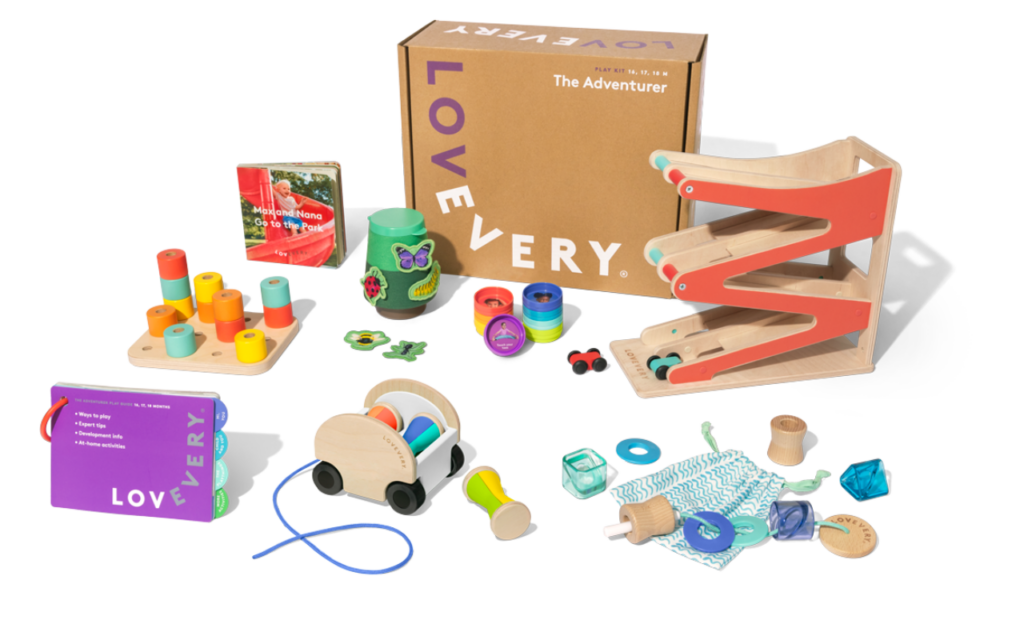
Look for toys that invite active participation rather than doing all the entertaining themselves. Simple, responsive playthings help children discover cause and effect through their own actions.
For example, Lovevery’s Play Kits offer a curated selection of playthings tailored to different developmental stages, helping parents find activities that match their child’s emerging skills without having to navigate endless toy options.
And remember, developmental stages are guides, not deadlines. Follow your child’s interests and abilities while always checking age and safety recommendations.