
Bunk beds safety for kids: A comprehensive guide
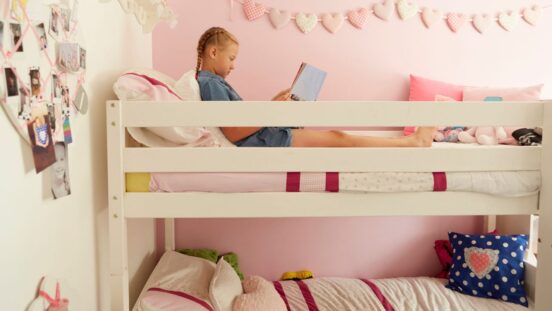
Bunk beds are a great space saver, but are they safe?
The novelty of a bunk bed in your bedroom is often a childhood staple. Sharing with siblings, or hosting sleepovers, kids love a bunk!
There is also no doubt that bunk beds are a convenient space saving solution for families with multiple children and limited space, however there is significant caution that must be taken before their use.
As useful as they are, bunk beds come with an associated danger, particularly for younger children.
Bunk beds are a practical space-saver, but safety must come first. Australia’s mandatory standard ensures bunk beds meet strict design, construction, and testing requirements to protect kids. Here’s what you need to know:
What the bunk beds mandatory standard covers
The mandatory standard applies to:
- Single or single-and-double bunk beds stacked one above the other (pre-assembled or flat-packed).
- Any bed where the top mattress base sits higher than 800 mm above the floor.
The mandatory standard doesn’t apply to:
- Portable camping bunk beds.
- Built-in bunks in caravans, camper trailers, or motorhomes.
- Hospital beds.
For safe and compliant bunk beds, always check for proper labels, markings, and sturdy construction. Safety starts with choosing the right bed for your family!
Are bunk beds safe?
The top bunk or a raised bed isn’t recommended for children under nine. However, the appropriate age can vary depending on a child’s maturity and development.
When assembling a bunk bed, securely install guardrails on all four sides of the top bunk or raised bed, ensuring proper spacing for access openings. Regularly check connections and fasteners to ensure they’re strong and stable, preventing collapses under weight.
Keep bunk beds away from hazards like blind cords, curtain cords, heaters, lights, and ceiling fans. Remove ladders when not in use to stop small children from climbing. Never allow children to jump or play on any part of the bunk bed.
For added bunk beds safety:
- Avoid bunk beds for kids under nine. Children under six are at the highest risk of injury.
- Consider a regular bed with a trundle as a safer alternative.
- Reserve the top bunk for sleeping only, as falls during play are the most common injuries.
- Always secure ladders and guardrails, even against a wall.
- Check for loose bolts, worn brackets, or other damage. Repair immediately.
- Avoid gaps that could trap a child’s head or limbs.
- Use mattresses designed for bunk beds. Ensure the mattress height won’t compromise guardrail safety.
When using unfamiliar bunk beds, such as those in holiday rentals, inspect them carefully.

Common bunk bed injuries
Serious injuries can occur if the bunk bed is poorly made or is used incorrectly. Falls are the most common cause of injury involving bunk beds and can be fatal.
Children can suffer:
- concussions and fractures if they fall from a raised bed or top bunk or while trying to climb up or down
- strangulation if their head or neck gets caught between gaps in and around the bunk bed, or if clothing is snagged on parts of the bed that stick out
- injuries to their heads, arms and legs if these become trapped within gaps in the bunk bed structure.
Where to position your bunk beds
Most people have bunk beds against a wall, however, If your bunk beds can’t be flush up against the bedroom wall, then you must allow a clear space greater than 230mm right around the bed.
Bunks should never be placed against a window.
Avoid positioning bunk beds directly underneath or next to a ceiling fan or light fixture, ensure at least two metres clearance. Also check that there is ample room for your child to sit without hitting their head on the ceiling.
Bunk bed guard rails are non-negotiable!
Even if your bunk bed is positioned against a wall, ensure that all guard rails are fixed and stable on the top bunk. To avoid falls, the Australian Standard requires guardrails on all sides of the top bunk, with the top of the guardrails at least 160mm above the top of the mattress.
Make sure all nuts, bolts and other fasteners on bunk beds are flat or recessed and smooth and do not create a sharp point, edge or snag hazard.
Bunk beds must have permanent guardrails to all four sides. The vertical distance between the upper surface of the guardrail and the upper surface of the mattress base must be at least 260 mm.
Dangerous gaps on bunk beds
Small bodies might not be able to fit through the gaps, but body parts can and that comes with huge risk of injury and asphyxiation. Injuries to heads, arms and legs can occur if young children become trapped in gaps such as between rails and the mattress.
Ensuring that toys, books and any other sharp objects are clear from around the base of your bunk beds, reduces the risk of injury if a child is to fall.
Bunk beds must not have any gaps that can trap a child’s head or limbs.
Gaps must not be:
- between 95 mm and 230 mm, as a child’s head and neck may become trapped
- between 30 mm and 50 mm, as a child’s limbs may become trapped
- greater than 400 mm—such as in the guard rail—as they could allow a child to roll or fall out of the bunk.
There must also be no protustions with no parts of a bunk bed that stick out (protrusions) greater than 8 mm are not allowed. These provide hanging points that can lead to strangulation or accidental hanging.
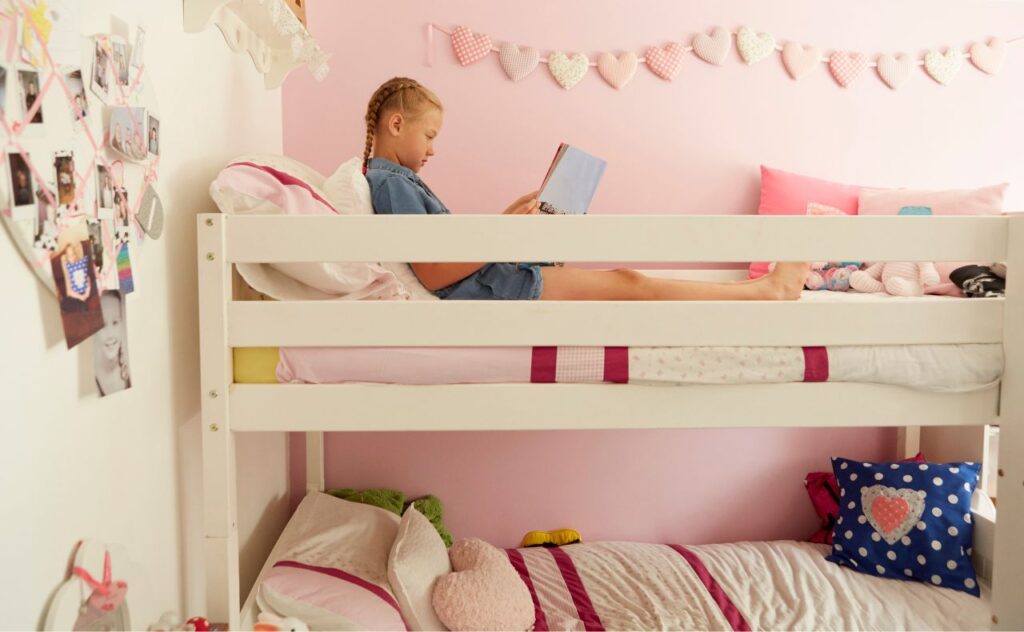
Consider a night light for your bunk beds
To make getting in and out of the top bunk safer during the evening, having a night light or a torch handy is a great idea.
Make sure kids know not to play on bunk beds
As tempting as a good old mattress jump is, when it comes to bunk beds to risk of serious injury is simply too great.
Set and enforce strict ground rules about how your bunk beds are used and ensure your child’s bedroom is a safe haven for sleep, rather than a potential trip to the emergency room!
For further information regarding bunk bed safety visit www.productsafety.gov.au.