
The power of play: Expert tips for making toddler playtime a priority

Make playtime count and boost your child’s development.
For toddlers, play isn’t just fun — it’s how they learn, grow, and make sense of the world. Through play, they build social skills, confidence, and resilience.
But with busy schedules and screen time worries, finding time for play can feel overwhelming for parents.
To better understand these challenges, Playgroup NSW and LEGO Australia teamed up to explore how, when, and with whom toddlers play.
Insights from over 1,000 parents reveal just how vital play is for early development – and offer practical tips to help parents embrace playtime, even on the busiest days.
The power of playtime – and why it’s worth prioritising
Play is a huge part of a toddler’s world – and it’s key to their learning, social skills, and emotional well-being.
Research reveals, toddlers spend on average, around 52 hours a week playing, mostly with family – mums, dads, and siblings – while time with grandparents and carers is much less.
But despite its importance, many parents struggle to make time for play. Exhaustion, stress, and packed schedules are common barriers, with 4 in 5 parents admitting they find it hard to engage in play.
Adding to the challenge, 1 in 3 parents say they often feel uninspired during playtime, and 6 in 10 feel guilty about screen time.
The good news? Play doesn’t have to be perfect – simple, everyday moments can make a big difference.
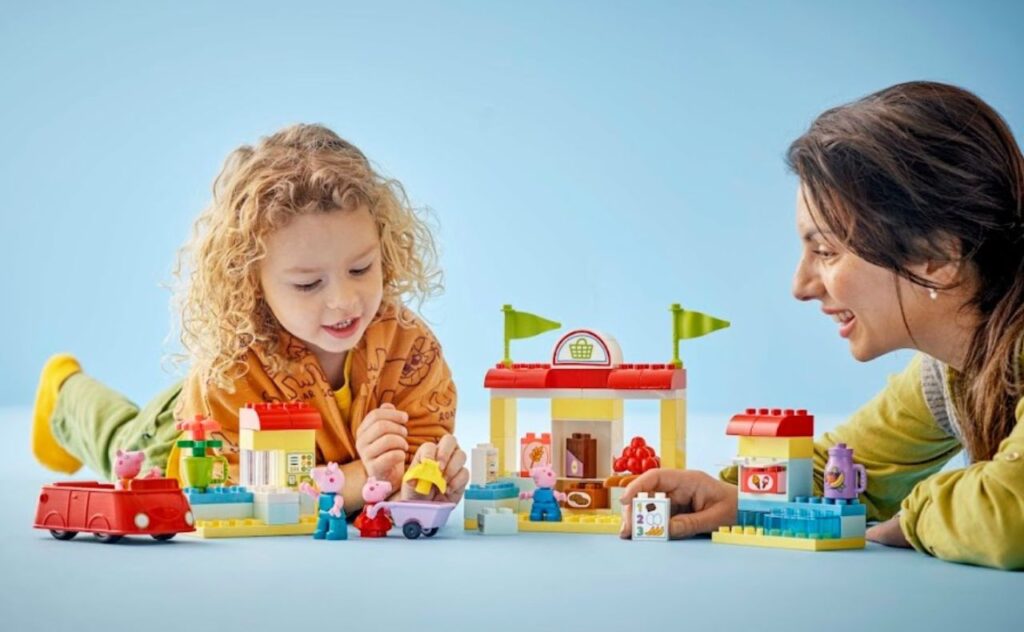
Making time to play and embracing the little moments
Creating memorable playtime with your toddler doesn’t require a picture-perfect setup or hours of planning. Instead, it’s all about embracing those small, everyday moments.
Parent Educator and LEGO DUPLO ambassador Gen Muir encourages parents to let go of the pressure to make every play session structured. “There’s no perfect way to play,” she says.
“It’s the little things – stacking DUPLO bricks while chatting about your day or letting your child guide you through their latest creation – that make the biggest impact on a child’s development. These spontaneous moments take the pressure off and allow both parents and kids to simply enjoy being together.”
One major barrier to play? Distractions. The research revealed that mums (64%) are more likely than dads (45%) to say that fewer distractions would make playtime easier. By reducing interruptions – whether it’s putting down the phone or stepping away from household chores – parents can create more meaningful moments with their little ones.
Helping parents embrace everyday play
The research findings show that parents can make play a bigger part of their daily routine by focusing on simple, everyday moments instead of aiming for perfection.
By letting go of the pressure to create structured playtime, parents can support their child’s emotional, social, and cognitive growth while strengthening their bond.
For parents wanting to create meaningful play experiences, the key is to be present. Unstructured moments of fun – like building, imagining, or exploring together – are what truly help kids develop important life skills.