
Why is my toddler melting down? The 3 triggers parents need to know

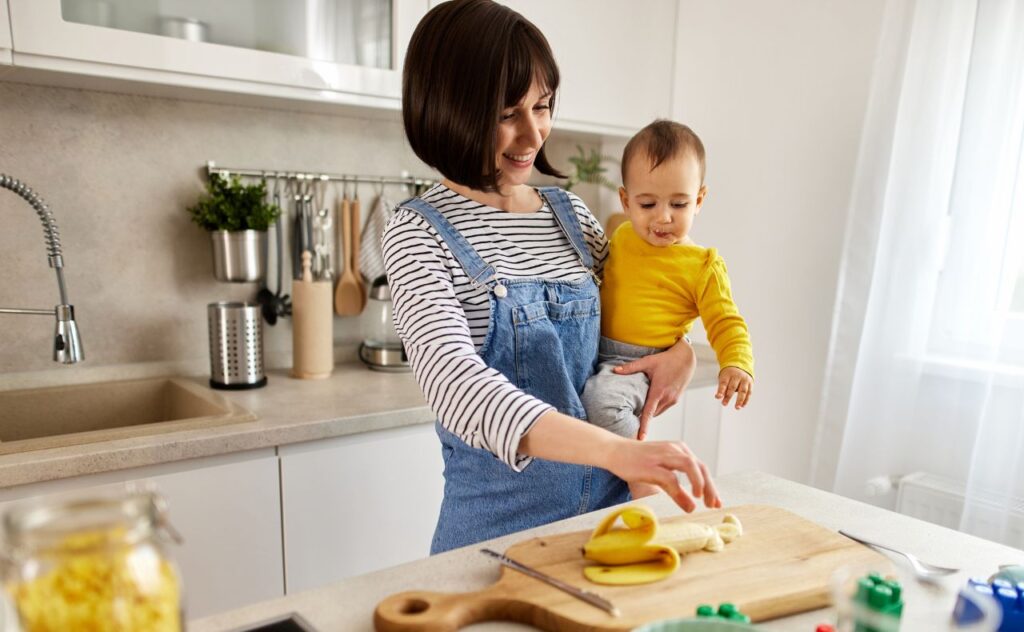
Toddler meltdowns and why your child loses it over the way you peel a banana.
By Gen Muir, Parent Educator at Connected Parenting
Every parent has had that moment. You peel the banana the “wrong” way, offer the blue cup instead of the green one, or cut the toast into squares instead of triangles and suddenly your child completely and utterly loses it.
It can feel confusing, frustrating, and if we’re honest, a little ridiculous.
But these moments actually make a lot more sense when we look beneath the surface.
What we’re seeing in these moments is what I often call the tip of the iceberg. It looks like our kids are struggling with something so small, but actually they are managing a lot and most commonly, it comes down to three key things: hunger, tiredness, and dysregulation.
Most toddler meltdowns are caused by three things: hunger, tiredness and dysregulation
Hunger
When children are hungry, they can get hangry. Their bodies are running low on fuel, which directly impacts their ability to cope, think clearly, and manage emotions.
Young children don’t yet have the awareness or language to say, I’m feeling overwhelmed because I haven’t eaten enough. Instead, it comes out sideways. They become more sensitive, more reactive, and much less flexible. So, when they absolutely will not leave the park? What might be right underneath is the need for a snack.
And parents see this play out every day. In fact, new research commissioned by Karicare Toddler, in partnership with Lonergan Research, found that 97% of parents say a snack or drink can instantly improve their toddler’s behaviour. That’s not because food “fixes” emotions, it’s because a fuelled brain copes better.
Tiredness
Kids are overtired, their brains are working overtime just to keep it together.
Sleep is absolutely essential for emotional regulation, and when children are running low on it, their ability to manage even small disappointments drops significantly. Things that they might usually handle with ease suddenly feel enormous.
This is why the dinner, bath bed routine can be so hard for them and for us. When bodies and brains are tired emotions get much harder to manage.
Dysregulation
Then there’s dysregulation, which is really about how overwhelmed a child’s nervous system is in that moment.
We often laugh about toddlers losing it over something small, like how a banana is peeled, but it’s incredibly common. Research shows that 80% of parents agree even something as simple as a banana can trigger big toddler behaviour.
Children are not born knowing how to regulate their emotions. This is something they learn over time, through co-regulation with calm, supportive adults. In fact, the brain systems responsible for regulation are not fully developed until the mid twenties.
So when a two or three year old melts down over a banana, it’s not because they are being difficult. It’s because they simply don’t yet have the skills to manage the big feelings that come with disappointment, frustration, or things not going their way.
Add in hunger or tiredness, and we are often in meltdown zone.
One of the best questions we might ask ourselves when our child is struggling starts with the words “I wonder…”
“I wonder if she is tired or hungry?” is one of the best ways to catch our reactivity and to enable us to meet the needs of our child in that moment. In the moment, our role isn’t to fix the banana or the cup or the toast. You might say to yourself “this isn’t my job to fix this or solve this, it’s my job to be here”.

Practical ways to support your child with meltdowns
Get ahead of hunger and tiredness: Regular snacks, balanced meals, and protecting sleep as much as possible can make a huge difference. A well fed, well rested child has a much bigger capacity to cope with life’s little frustrations.
Look underneath the behaviour: When your child loses it over something small, pause and ask yourself what is really going on here. Hunger, tiredness, and overwhelm are often the real drivers.
Lower expectations when they are struggling: If your child is already stretched, it is not the moment to push independence or teach a lesson. Step in and lower the pressure until they are fed and rested!
If you are a parent in the thick of it right now know that you are not alone, it’s not just your child and it does pass. Also know that don’t need to fix, solve or change your child in the moment. What they really want more than anything else is to feel seen and heard, and a little less alone as they learn to feel their feelings.