
Elevate Wellness: The best sleep position for rest
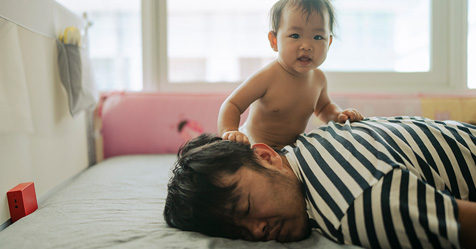
Sleep smarter, not harder! Learn the best sleep position to enhance rest quality and avoid common discomforts for a rejuvenating slumber.
Written by Sleep Experts at Emma Sleep.
We all know that the way our body is arranged when we sleep influences the quality of our sleep. Whether that effect is negative or positive is both an individual matter (different strokes for different folks, after all) and a studied phenomenon.
Really, the most important aspect in all of this is figuring out how to best avoid the plethora of sleeping problems plaguing the sleepy-weary generations today. That’s why knowing more about your sleeping position might be a good place to start.
We’ve compiled the three main sleeping positions as a parent, so you can implement the option that is best for you.
Pregnant and looking for sleep tips? Read this …
Your sleeping position and why it matters
1) Sleeping On Your Back
Sleeping on your back is the best position for posture and shoulder impingement. This position distributes your weight across your body, minimising pressure points and optimally lining up your internal organs. Back-sleeping is known to improve spinal alignment, especially with buffers like memory foam underneath your neck to protect the natural curve of the backbone.
Pros – When a person sleeps on their back, it allows them to go into the body’s natural alignment, protected by the even weight distribution.
Cons – While back sleeping is good for helping people reduce muscle tension, it is not a good idea for people with obstructive sleep apnoea as it can cause the flesh of your throat to relax and block the airway (yikes), making it hard for you to breathe and making you even more prone to the debilitations of sleep apnoea.
Tips to sleep on your back:
- Put a small pillow under your knees to support your spine and the natural curve in your lower back.
- Use your head pillow to support your neck, shoulders, and back.
- Use specially-formulated foam neck pillows to support your head and neck contour in this position.
- Prop up your head with more pillows if you have a cold.

2) Sleeping on your Side
Many different studies have also proven that sleeping on the side is the best position for quality breath control and reduction in the risks of snoring, sleep apnoea, gastroesophageal reflux disease or GERD, and heartburn, etc.
Pros – It is the second-most healthy sleeping position, right after back sleeping. It improves circulation to the heart and blood flow to the fetus (during pregnancy), uterus, and kidneys, among other things.
Cons – Sleeping on your side may disrupt circulation under the side you are sleeping on, especially if your mattress is too firm.
Tips to sleep on your side:
- Place a firm pillow between your knees to prevent your hip and knee joints from collapsing and reduce stress on your hips and lower back.
- Put a small pillow between your waist and mattress if there is a gap to support your body further.

3) Sleeping on Your Stomach
Lying face down while you sleep is not the best position for your posture as it stresses your neck, constricts your blood, and compresses your spine (no kidding). However, sleeping on your stomach or the prone position does have its advantages. It stops your heart and stomach from pressing down on your lungs, allowing your air sacks to inflate fully.
Pros – Only a handful of people may find this position comfortable and conducive to sleep. It may not be a good idea to sleep in this position regularly. However, if you are looking to get rid of symptoms related to sleep apnoea, sleeping on your stomach occasionally will help. The word to focus on is ‘occasionally’.
Cons – This position may be challenging on your back and neck and may have you waking up feeling strained or stiff. Also, it may affect the alignment of your spine, which may open up a can of worms in terms of health problems. Since sleeping on your stomach isn’t good for posture, stretching can help you avoid risks for joint tension, strains, and muscle damage.
Tips to sleep on your stomach:
- Put a flat pillow under your stomach and pelvis area to keep your spine aligned.
- When supporting your head, either use a flat pillow or one that is adjustable to your needs or even no pillow at all. This will ensure that your neck and head will be less angled while you sleep.
- Please don’t sleep on your stomach regularly.
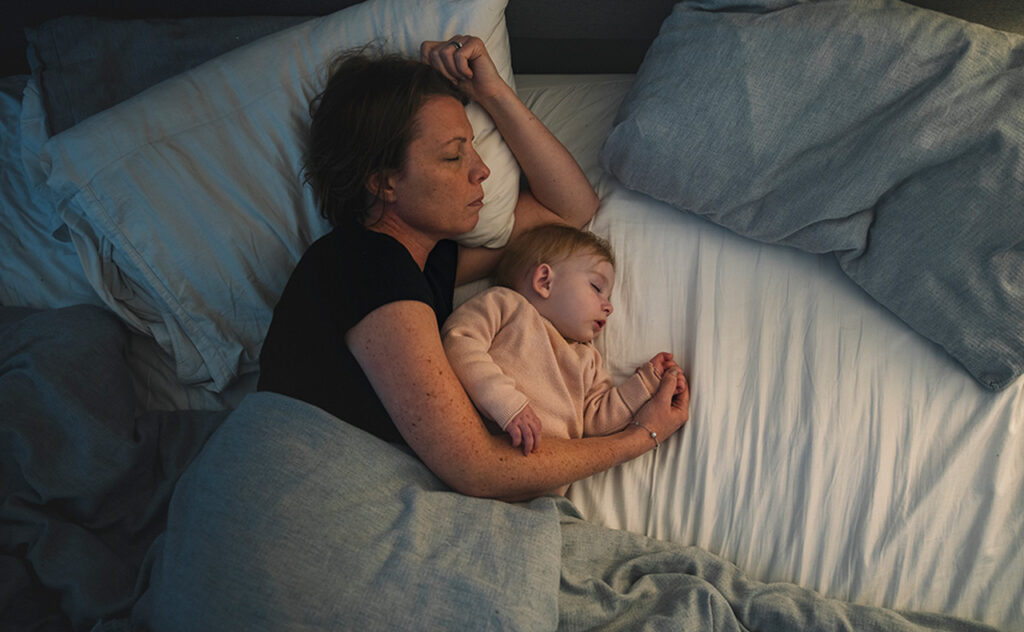
4) Co-sleeping
If you co-sleep with your bub, you should take extra care to make your bed a safer environment for your child whether you decide to, or you end up falling asleep together.
Pros – Compared to newborns who sleep alone, bed sharing babies are more likely to be nursed and to breastfeed more frequently. Also, co-sleeping can help you respond to your baby more quickly, calm them down more easily, and ideally get adequate sleep at the same time.
Cons – Even though SIDS is uncommon, the risk is significantly higher when you share a bed if you or your partner are under the influence of alcohol, smoke or use e-cigarettes or have consumed any drowsy-inducing medications. You should stay away from sharing a bed if:
- Your newborn is less than three months old.
- Your child was born early (born earlier than 37 weeks)
- Your infant was born with a low weight (less than 2.5kg or 5.5lbs).
Tips to co-sleep more securely:
- Keep all objects that can impede your baby’s breathing or cause them to overheat, such as pillows, sheets, and blankets, pets or other kids away from them.
- Ensure that the child won’t roll off the bed or become wedged in between the mattress and a wall.
- Use a firm mattress with a close-fitting sheet.
- Sleep in a ‘C’ position.
- Do not co-sleep after drinking, smoking, or taking medications that affect your sleep.
- Always consult your doctor and/or midwife for safe co-sleeping tips.
Finding a comfortable position for you that will not wake you into a state of discomfort, feeling more tired than before you went to sleep, is the key. And yes, we would all appreciate it if you would help us keep the average grumpiness levels low. Sleep well!