Our editors handpick everything we recommend. We may receive revenue for sharing this content or when you shop through our links. Read more here
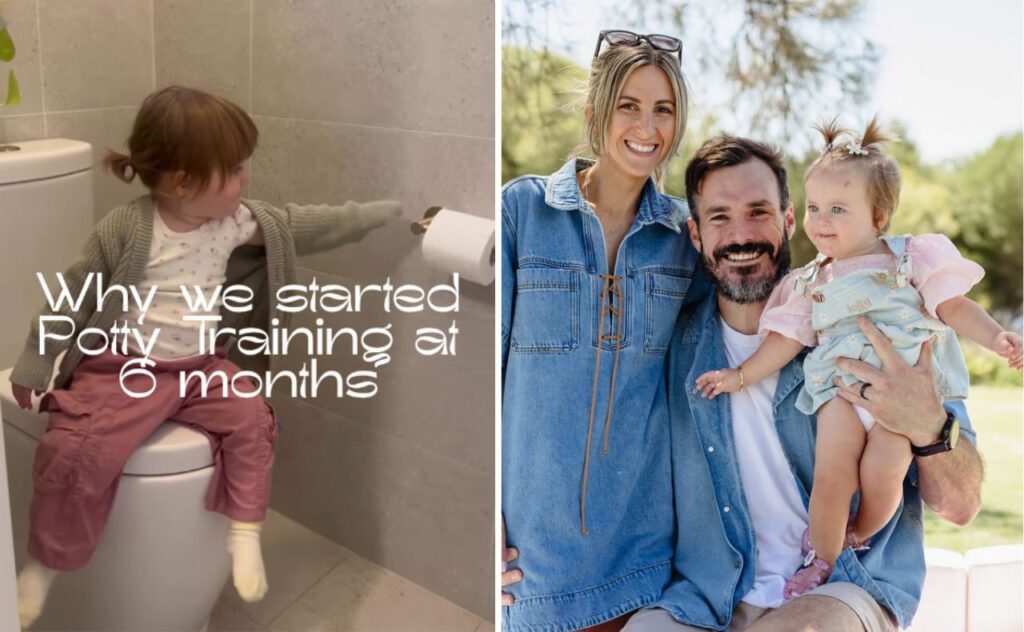
Early toilet training tips: “Ava is now 17 months and she has been using a potty since she was 6 months old.”
Toilet training is often considered a toddler milestone, but The Bachelor alum Irena Srbinovska is flipping the script, revealing that her daughter Ava was confidently using the potty before her first birthday.
The former reality star, who met husband Locky Gilbert on the 2020 season of The Bachelor, welcomed baby Ava on February 23, 2024. Now 17 months old, Ava has been using a potty since she was just six months – and hasn’t done a poo in her nappy since she was 10 months old.
Sharing her experience on Instagram, Irena says she was a sceptic at first, until she saw the results for herself.
“Here it is FINALLY! How we potty trained Ava at 6 months of age…”
“Ava is now 17 months and she has been using a potty since she was 6 months old. No poo in her nappy’s since she was 10 months old. This is how we did it. And I was skeptical too, a friend of mine did it with her kids and I was in disbelief BUT it works!!! Trust me!”
Irena’s 7 tips for early toilettraining
1. They started slowly, building the habit into everyday routines.
“As soon as Ava was able to sit (6 months) we sat her on a potty,” explains Irena. “Initially we started first thing after sleep or nap, then progressed to after eating and drinking.”
2. To help build associations, Irena and Locky always used the same phrases with Ava during potty time. “We always verbalised what we were doing. ‘Ava, time for potty’, ‘Does Ava need to go to the potty?’, so she would start associating the words with the action.”
3. They also made a point of reinforcing the connection between the action and the words by acknowledging when Ava went. “With a wee we would say ‘That’s a good wee’ and same for a poo so she would learn those terms.”
4. At home, Irena says they ditched the nappies early on in favour of undies. “At home Ava wears undies only, makes getting them onto the potty easier and faster. Also helps them associate the wet feeling with needing to pee.”
(Image: Instagram)
5. As Ava became more familiar with the routine, she started initiating potty time on her own. “As she started feeling more comfortable with the potty, she started walking to it when she needed to go. You will learn the cues your baby is showing. Ava goes quiet and wanders to the bathroom. Now that she is older, she will ask to go.”
6. Irena says the key is keeping it low-pressure and fun. “Don’t force them or yell at them to go, make it fun. We often do bubbles or other methods of distraction.”
7. And when Ava does go? “Praise them when they go! We do a big clap 👏🏼.”
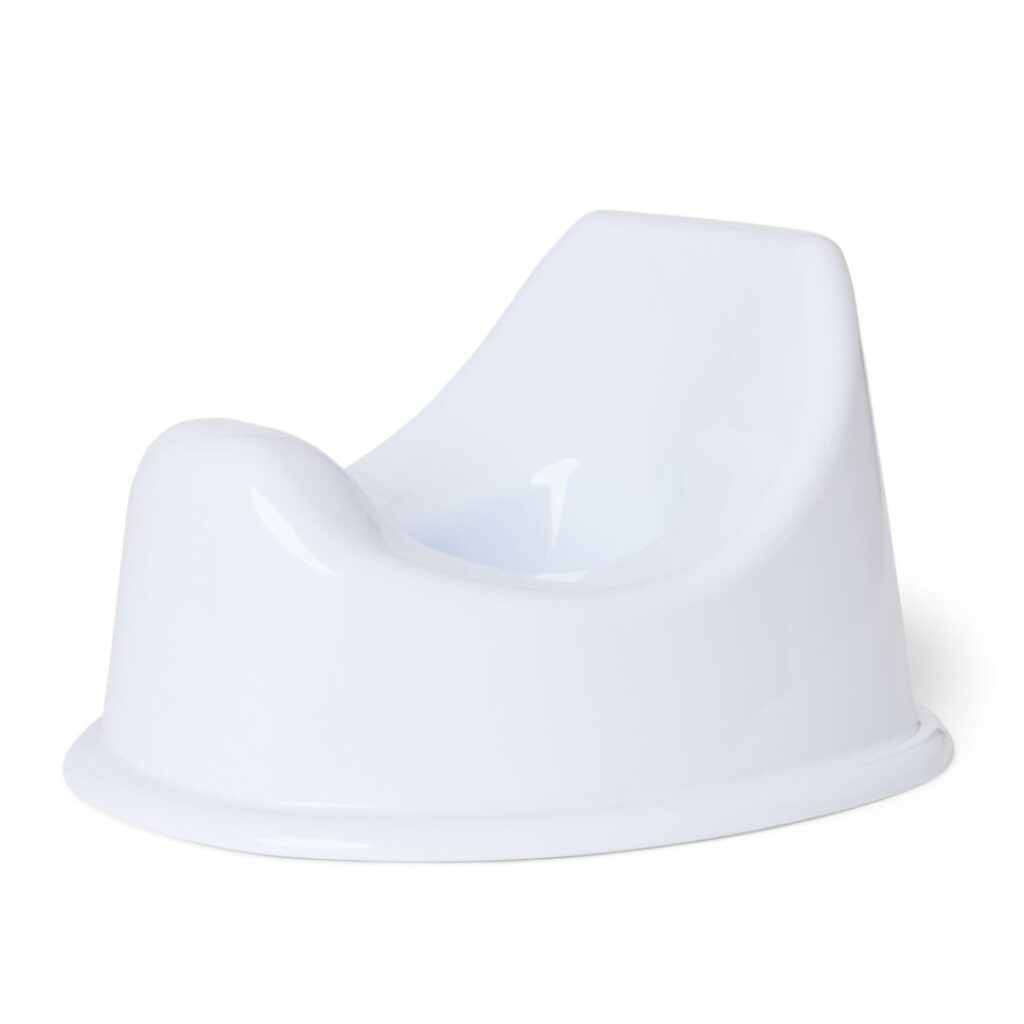
8. In terms of gear, Irena kept it simple and affordable. “The potty I use is one from Big W, I think it was $7 and we have one in each bathroom and always take one with us when we go away. She also has one at daycare.”
The result? One very capable toddler. While Irena’s honest about the effort involved at the start, she says it definitely pays off.
“We couldn’t believe and still can’t when she walks up to us and says ‘poo’ and then walks to the bathroom but it’s worked. We use pull-ups or undies now. It does take a bit of attention at the beginning, watching and prompting but soon enough you’ll have a potty trained baby. And it’s so much easier to clean up! And saves you nappy’s!”
Edwina O’Connell, who runs elimination communication (EC) workshops across Queensland and northern New South Wales, explains that Irena’s method aligns closely with established EC practices:
“It’s just about looking at your baby and seeing when they’re about to go and responding to that, by holding them over a toilet or potty.
“There are a bunch of signs a baby gives when they need to go — they might go still or quiet, or with my son he’d shake his fist, and then if you’re responding the cues get stronger.”
According to EC principles widely shared in Australia: timing, cues, cueing sounds and caregiver intuition are the pillars of early infant‑led potty training. By starting around six months, once a baby can sit unsupported, parents can begin to build awareness and communication around toileting.
There’s no “right time” to toilet train
Paediatrician and public health physician Professor Sharon Goldfeld from the Murdoch Children’s Research Institute says it’s important for parents to feel supported, not judged, no matter when they choose to start toilet training.
I often have parents come to me and say ‘my child hasn’t toilet trained and I’m really worried’ — there is a lot of pressure on parents around toilet training, but I say to parents there’s no relationship between the age of toilet training and other outcomes in life,” she said.
Professor Sharon O’Connell says that even for parents practising elimination communication, it’s important not to become too focused on ditching nappies too soon.
“If you’re wanting to graduate to total independence quickly you’re probably setting yourself, – and them – up for disappointment, stress and tears,” she said.
“It’s not about focusing on the end goal, it’s about focusing on communication and connection.”
Made from lightweight, durable plastic, it’s designed with a contoured seat for comfort and a rear handle for easy emptying. Simple to clean and easy to move from room to room, it’s proof you don’t need to spend big to make toilet training a success.
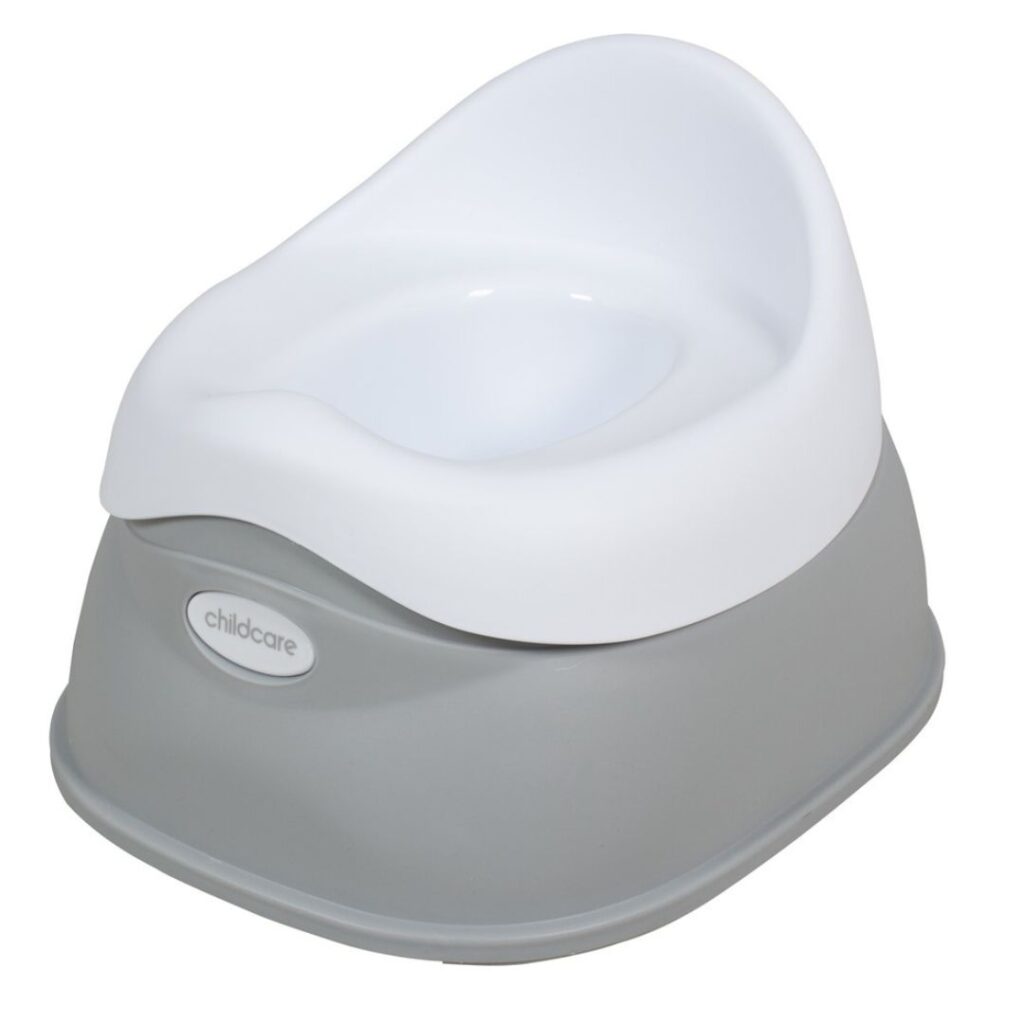
This potty ticks all the boxes for comfort, safety and convenience. It features a removable insert for fuss-free cleaning, a non-slip base to keep things steady, and a modern look that won’t clash with your bathroom. Lightweight and easy to assemble (no tools needed!), it’s a smart choice for families starting the toilet training journey.
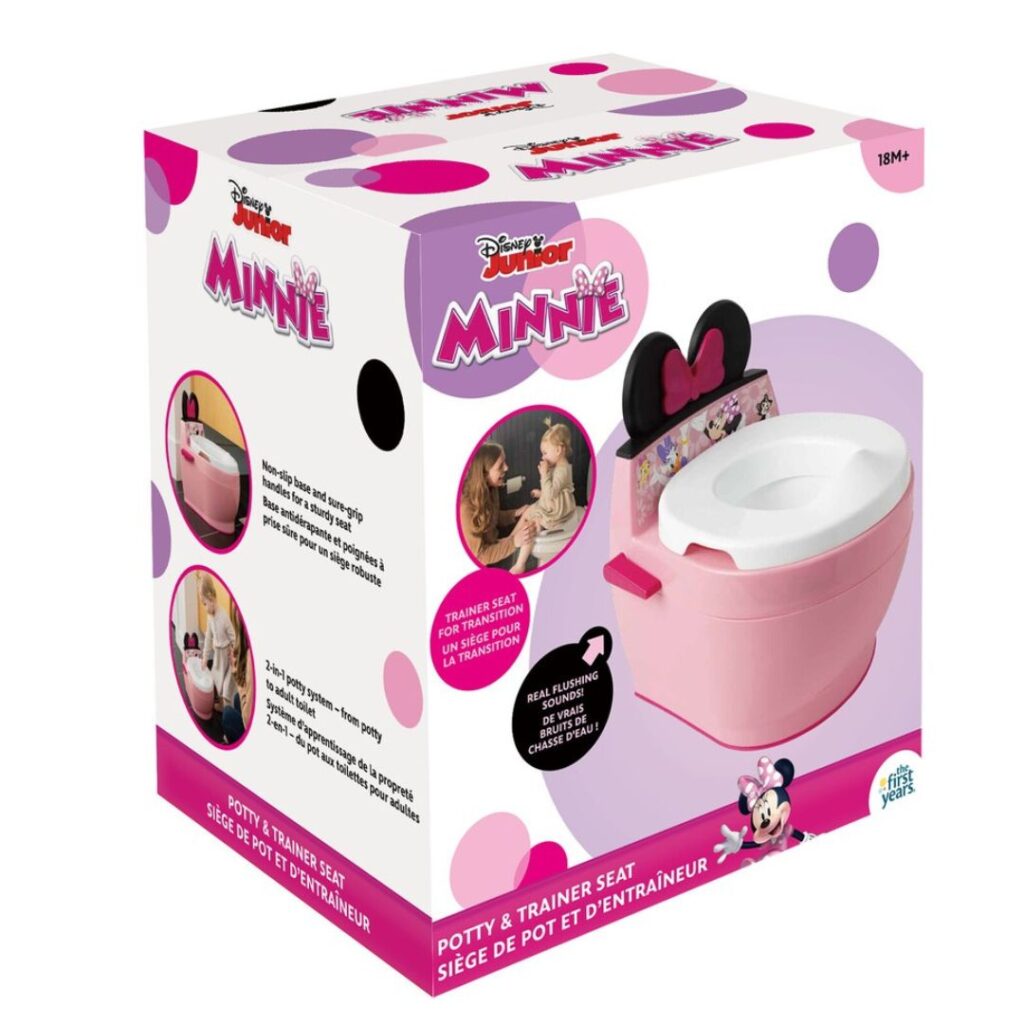
Disney Minnie Mouse 2-in-1 Potty & Trainer Seat $29 (was $49) from Big W
Designed to grow with your child, it starts as a standalone potty and easily transforms into a trainer seat that fits most adult toilets—helping your toddler feel confident every step of the way. The pink design, complete with Minnie’s iconic ears and a realistic flushing sound, adds a sense of fun to toilet time, while the non-slip base keeps things steady and safe.
We collect and use data about how you use our sites to improve your experience, analyse site performance and provide you with relevant ads. To find out more or to opt-out of targeted ads, please see our Privacy Centre
We collect and use data about how you use our sites to improve... Learn More
We collect and use data about how you use our sites to improve your experience, analyse site performance and provide you with relevant ads. To find out more or to opt-out of targeted ads, please see our Privacy Centre