
Your quick guide to earaches in children
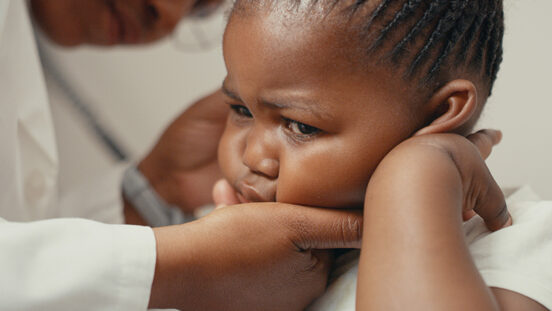
Earaches and pains are part of growing up. Here’s how to recognise the signs and help your little one get through it.
Earaches and ear infections can be a serious source of discomfort for your little one. Thankfully, they are easy to treat and should occur less frequently as your child gets older. Ear infections are very common in young children and research shows 75 per cent of children suffer from an ear infection at some stage.
Earaches and ear infections in children
“Earaches and infections are common in small children because their inner tubes, specifically the Eustachian tube, is small, poorly developed and doesn’t drain well,” says Dr Michael Taplin, a paediatric ear, nose and throat specialist. Young children are also prone to infections because they are still building up their immunity.
What causes ear problems?
“The most common problem is middle ear infection,” Dr Taplin says. “We don’t know all the causes but most are bacterial and some are viral. You might have a little inflammation too, and they can happen when the immune system gets run down.”
With an ear infection, pus or fluid builds up in the ear causing pain, fever and problems with hearing. Children who suffer from hayfever or sinus problems, are exposed to second-hand smoke, or those with a cleft palate or Down’s syndrome are also more susceptible. ‘Glue ear’ can develop after a middle ear infection, and occurs when the ear fills up with thick fluid. If the fluid does not drain away it can cause problems with hearing and balance.

What are the signs of an ear problem?
Signs of an ear infection include pulling at the ears, fever, difficulty hearing, problems sleeping and a loss of appetite. It can be more subtle than that, however.
“Some children don’t present to a GP until they have quite significant hearing problems and even speech delays,” Dr Taplin says. “Kids are very stoic and can be really unwell but still want to play, so they go under the radar until the problem is quite serious.”
How can they be treated?
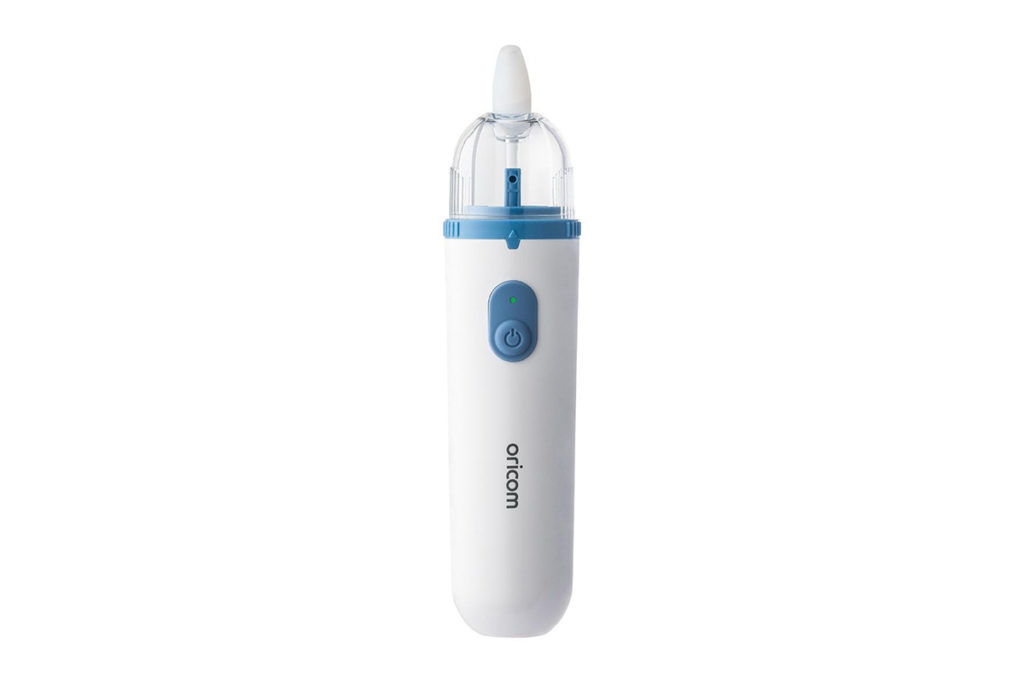
While most mild infections clear up by themselves, you can ease discomfort with analgesic medication such as paracetamol. Another option is to try a nasal aspirator such as Oricom HNA300 Rechargeable Nasal Aspirator. Designed for babies and small children, this aspirator provides a quick and easy way to remove mucus and clear the nasal passages.
In more severe cases, antibiotics may be needed to get rid of the infection.
“In the case of glue ear, surgery may be needed and a grommet inserted so the fluid can drain properly,” says Dr Taplin. Visit your local GP so they can diagnose and treat your child accordingly. “Other ways to ease discomfort include using warm compresses, raising the head of your child’s bed and using ear drops,” Dr Taplin adds. And hopefully with some TLC your little one will be bouncing back in no time!
This article first appeared on Practical Parenting and has been republished here with permission