
“We can’t afford it”: Why this phrase does more harm than parents realise

Do you say, ‘we can’t afford it’? Money coach and mum, Kim Kent on what to say instead.
By Kim Kent – Money Coach, Mum & Reformed ‘Poor Girl’
I still remember the way my stomach would drop when I asked for something at the shops.
A new Barbie, a trip to McDonald’s or even one gold coin for the school canteen.
And the answer was always the same: “We can’t afford it.”
I also heard it in other ways like, “Money doesn’t grow on trees,” or “You should just be grateful, Kim, you know there are kids starving in Africa…”
Now, as a grown adult – and mother myself – I know my parents were doing their best. They did love me, they just didn’t know the damage those words did. Words that became a quiet, constant script in my mind. One that followed me well into adulthood.
I grew up with money stress thick in the air. We didn’t have fancy brand clothes or the latest toys. When all my cousins were getting Tamagotchis and Gameboys, my brother and I got the hand-me-downs. I felt like the “poor kid” at school. And all I wanted was to feel normal and to be like the other kids. I just wanted to feel good enough.
Instead, I felt shame. Like wanting something made me greedy, and I didn’t deserve the things others got with ease.
And the reality is that now, as parents, we don’t even realise we’re passing this same wound down to our kids.
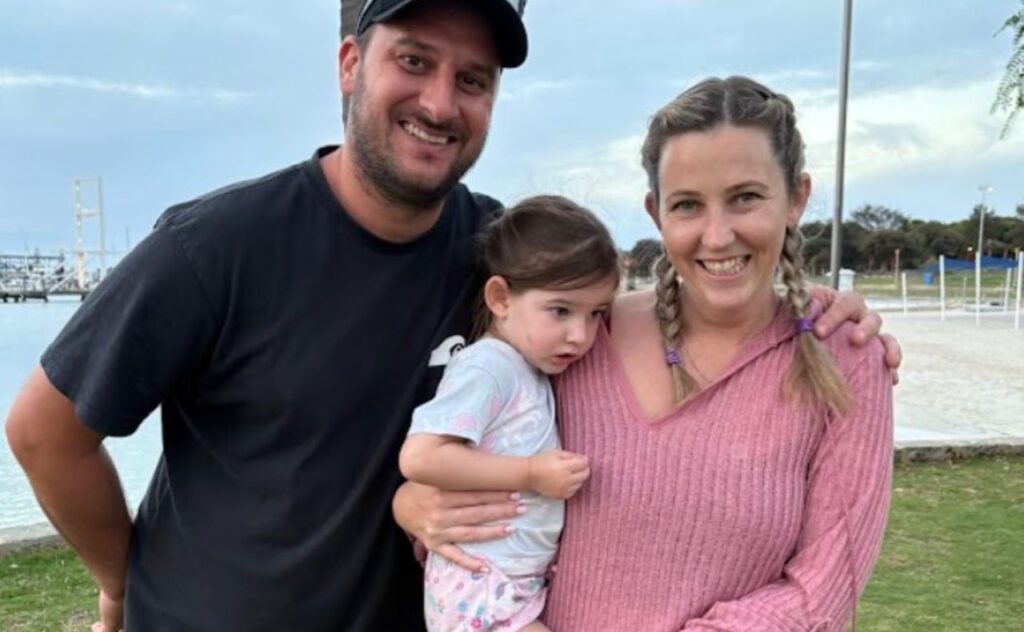
Saying ‘we can’t afford it’
When we say “we can’t afford it,” we usually mean well. We’re trying to protect our kids from the stress we feel around money. We want to avoid a meltdown or a back-and-forth negotiation.
And sometimes, it is the truth that things are tight, and there isn’t room in the budget.
But here’s what I’ve learnt through my own healing, through working with hundreds of women, and through becoming a parent myself:
Kids don’t understand the economy. They don’t know what interest rates are, why groceries are more expensive, or how your pay cycle works. They’re not hearing: “This doesn’t fit into our plan right now.”
They’re hearing:
- “You’re not good enough to have that.”
- “Other kids are better than you.”
- “There’s something wrong with you for even wanting it.”
Because a child doesn’t have the ability to separate what they want from who they are. So when their desire is repeatedly shut down, it doesn’t just disappoint them… It shapes them.
It builds beliefs like:
- “I don’t deserve nice things.”
- “I shouldn’t want more.”
- “There’s never enough.”
And those beliefs don’t disappear when they grow up. They become the adult who feels guilty spending money on themselves. The woman who makes good money but always feels broke. The mum who’s afraid to dream too big, because what if she asks for too much?

Beliefs get passed down like hand-me-downs
The way we feel about money is inherited. Not genetically, but energetically. It’s passed down in conversations, in body language, in the tiny, everyday moments we often overlook.
From how you talk about bills to the energy you carry at the checkout to how you speak to your partner about spending.
Whether you realise it or not, your children are watching. Listening. Absorbing. Their subconscious minds are wide open in those early years, so everything you say about money becomes their truth too.
If all they hear is “we can’t afford it,” they’ll grow up believing that money is limited, hard to come by, or reserved for other people.
But here’s what I now know, after unlearning decades of shame and scarcity:
Money is not limited. It is not just something you earn, budget, or stress about. It is an energy. A flow. It’s an unlimited resource that you use as a tool to either survive or thrive in this lifetime.
And our kids are learning their relationship with money from ours.
So what can we say instead of ‘we can’t afford it’?
This isn’t about guilt. Parenting is hard enough without adding “say the perfect thing every time” to your mental load.
But it is about awareness. It’s about choosing to use language that empowers instead of limits.
So instead of shutting down your child’s desire with a hard “no,” try something like:
- “That’s a great idea! Let’s save for it together.”
- “That’s not something we’re buying right now, but maybe soon.”
- “Money is something we get to plan with, want to help me work it out?”
It keeps their dreams alive. It teaches them patience without shame. And most of all, it shows them that money isn’t something to fear, but something to build a relationship with.
We don’t have to raise kids who repeat our money wounds.
We get to raise kids who feel confident. Abundant. Worthy.
We get to break the cycle of scarcity and completely change the trajectory of our children’s financial future.
And that shift starts with the small moments, like the words we choose when we’re standing in a checkout line, holding a dream, and figuring out how to say “not now” without making it mean “never.”
Because our kids are listening. And they’re believing every word.